Why Gift Planning Isn't Really About Planned Gifts
When people hear the words gift planning, they often imagine complicated legal documents, tax strategies, or financial planning conversations. While those elements certainly play an important role, they are not what first comes to mind for me. After spending more than fifteen years working with donors and nonprofit organizations, I've come to believe that gift planning is much less about technical expertise than it is about helping people accomplish something deeply meaningful.
At its heart, gift planning is about people. It's about understanding what matters most to someone, learning what kind of legacy they hope to leave behind, and helping them support the causes they care about in a thoughtful and lasting way. The legal and financial tools simply help bring those intentions to life.
Unfortunately, gift planning has developed a reputation for being intimidating. The terminology alone can make people hesitant to engage in the conversation. Charitable remainder trusts, gift annuities, beneficiary designations, estate plans, tax implications. The list goes on. For many nonprofit professionals, it can feel like a specialized world that requires years of technical training before they're qualified to even begin the discussion.
I've found that this perception often becomes the greatest obstacle. Development professionals hesitate because they don't want to give incorrect information. Donors hesitate because they're worried the conversation will become more complicated than they anticipated. As a result, conversations that could have been meaningful simply never happen.
What I've learned is that most donors are not looking for someone to overwhelm them with technical knowledge. They're looking for someone who can help them understand their options without making them feel overwhelmed. They want someone who can answer questions honestly, explain concepts clearly, and guide them through a process that may be unfamiliar but doesn't have to be intimidating.
That is one of the reasons I care so deeply about making gift planning approachable. Throughout my career, I've discovered that when people truly understand what is possible, they often realize they can make a much greater impact than they originally imagined. The conversation shifts away from legal documents and financial strategies and begins to focus on something much more important: the difference their generosity can make for future generations.
This is also why I believe joy belongs in gift planning. At first glance, that may seem like an unusual word to associate with conversations about estate planning or legacy gifts. Yet when someone realizes they have the opportunity to care for an organization that has shaped their life, support a mission they believe in, or ensure their values continue long after they're gone, those conversations become surprisingly hopeful. Rather than focusing on what someone is leaving behind, the conversation begins to focus on everything they're helping build.
For nonprofit organizations, this perspective matters just as much as it does for donors. Planned giving programs are often viewed as highly technical initiatives reserved for the largest institutions or the most experienced fundraising professionals. In reality, successful gift planning programs begin with relationships. They begin with listening well, asking thoughtful questions, and creating an environment where donors feel comfortable exploring what is possible. The technical expertise certainly matters, but it should support the relationship rather than define it.
Over the years, I've had the privilege of working alongside generous donors, dedicated fundraising professionals, and organizations doing remarkable work in their communities. The most successful engagements rarely stand out because of a particularly sophisticated gift structure. They stand out because someone took the time to build trust, answer questions with patience, and help another person see how their generosity could create lasting impact.
That's why I don't think gift planning is ultimately about planned gifts. It's about helping people express their values through generosity in ways that are both meaningful and achievable. When we begin with that mindset, the technical details become much easier to navigate because everyone understands the purpose behind them.
If there's one lesson I've carried with me throughout my career, it's that confidence grows through conversation. When nonprofit professionals feel supported and donors feel understood, gift planning becomes far less intimidating than many people expect. Instead of being a difficult topic to avoid, it becomes one of the most rewarding conversations an organization can have.
Whether your organization is looking to strengthen an existing planned giving program, reconnect with legacy donors, or simply feel more confident navigating these conversations, the first step isn't mastering every technical detail. It's gaining the clarity to know where to begin.
Ready to take the first step?
If your planned giving program has lost momentum, or you're simply looking for a place to start, I invite you to download my free guide:
The Gift Planning Reset
Three practical ways to bring new life to your legacy giving program.
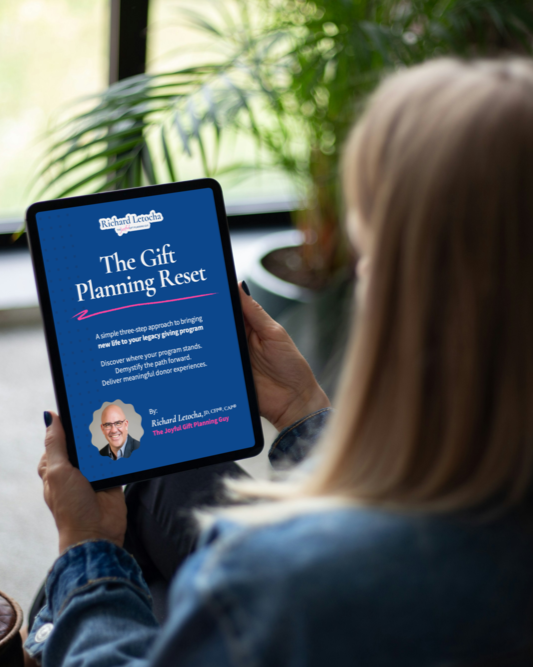
Inside, you'll learn how to:
Evaluate the current health of your planned giving program.
Re-engage legacy donors in meaningful ways.
Build confidence within your development team.
Create simple, sustainable habits that strengthen your legacy giving efforts over time.
My hope is that this guide helps you see gift planning the way I do, not as a complicated fundraising strategy, but as an opportunity to build deeper relationships and help donors create the kind of legacy they hope to leave behind.